How to Start Birdwatching: A Beginner’s Guide in 10 Steps
Hey, this is Josh, co-founder of LYFER. There are plenty of great step-by-step guides on how to start birding already out there, so this isn’t about adding another one.
This is simply something a little more personal, my perspective on getting started, what I learnt along the way, what I wish I knew at the beginning. Also, all the things I now find myself sharing with people who are curious about birding.
And if you know LYFER, you’ll probably already know that we tend to look at birding a little differently. Not because we’re trying to reinvent it, but because we like adding another layer to this already popular activity, although around here, we tend to call it a lifestyle choice.

There is a funny thing about starting birding.
At first, it can feel like everyone else knows something you don’t. They know the bird. They know the call. They know where to look. They somehow notice something flying overhead while you are still trying to work out what everyone is staring at.
But there is one thing worth knowing from the beginning:
Every birder started by not knowing. Every birder started by getting it wrong. And this is all part of the journey.
For me, that is probably the most important thing to understand. It is not about becoming an expert. It's about the journey of discovery and feeding your own curiosity. It's personal, while still being something you can share and enjoy with others.
I always tell people I meet at markets with LYFER that birding might be one of the most amazing gifts you could ever give yourself, or someone else.
Ok, here are my 10 steps.
1. Start local
One of the biggest misconceptions about birdwatching is that you need to travel somewhere off the beaten track to do it. Well, guess what? Birds are everywhere.
So, start with somewhere you are familiar with. It could be a walk through your local park, to your local cafe, a walk beside a creek or simply look at what is happening in the trees on your street.
What I'm asking you to do here, is simply change the way you experience things you do everyday. Once you begin paying a different kind of attention, somewhere you have walked a hundred times can suddenly feel completely different.
2. Before identifying, start noticing
When you first begin birding, there can be a strong urge to immediately ask, Hey, what bird is that? Identification is certainly part of birding, but it's not the whole experience.
Ask yourself questions like, ‘What features can I see?’ How big is it? What colours can I see? Is its bill long, short, curved or chunky?

Is it hopping along the ground, searching through bark, sitting quietly, chasing another bird or head first in the flowers?
Then, the most important thing is to listen. I always say: You bird with your ears first. Most times, they will always give themselves away!
So try this. Stop for thirty seconds and notice how many different sounds are around you. At first they can blend together, then slowly, individual calls start separating themselves from the general noise.
When I first started doing this, it changed my world forever.
This is when things become really interesting.
3. Get to know your neighbouring birds first
You do not need to learn hundreds of bird species, simply start with five and grow from there. The birds you see regularly are some of the best teachers you will ever have.
Once you become familiar with their size, shape, movement and calls, you start creating reference points for other birds.
You’ll begin thinking:
That is smaller than a magpie. It moves differently to a honeyeater. That is definitely not the call I normally hear here.
Without really trying, you are learning how to identify birds.
Aside from the bright colours on the Rainbow Lorikeet, it’s their quick, shallow wingbeats of their flight which really stands out to me when I see them darting across Melbourne skies.

4. You really don’t need to know what you’re doing
I think this deserves its own section, because the feeling that there is a “right” way to bird can stop people before they even begin.
You do not have to know every bird you see. You do not have to recognise bird calls.
You do not need a camera and you don't have to keep a life list (but it often gets you in the end.) And you certainly do not need to look like anyone’s idea of what a birder should look like. Birding just happens, whether during a half hour lunch break or a walk with friends.
It can happen while travelling, hiking, sitting on the beach or having a coffee outside.
Another thing I also love to share, with experience, is how birding can change the way you travel. You're now living in 2 worlds, and every trip offers the opportunity to go see what birds you can find when away from home!
5. When is the best time to go birding?
There is a reason birders talk about early mornings. Birds are often particularly active and vocal around sunrise, when many species are feeding and starting their day.
But if the words sunrise bird walk immediately make you reconsider the whole idea, do not worry.
Late afternoon can also be excellent but at the end of the day, when you are starting out, just go when birding fits into your life, otherwise it really doesn't work.
6. Let technology help, but not take over
There are some excellent apps out there but these are my go-to’s that have helped me learn about birds much easier.
Merlin Bird ID can really help narrow down what you are seeing using things such as size, colour, location and behaviour. Its Sound ID feature can also help you begin connecting calls with the birds making them. Sound ID is available in Australia, although the number of Australian species it can currently recognise is more limited than in some other parts of the world. It's continuing to grow as more recordings become available.
Merlin also keeps track of your Life List if you decide to start one. Above all, this app is really easy to use.
Next up is eBird. It lets you see which birds have been recorded nearby, discover birding locations and keep a record of your own sightings. It’s a little more involved and takes a while to get your head around but it's a game-changer for birding as you advance yourself.

Both can be incredibly useful when you are beginning.
It's worth mentioning though, as much as I love these apps and use them regularly, I know that there is a lot to be said for putting the phone away and staying present in the moment.
In fact, that's one of the reasons we created a Field Notepad at LYFER, so you can make notes about your bird sightings without automatically reaching for your phone.
7. Do you need binoculars?
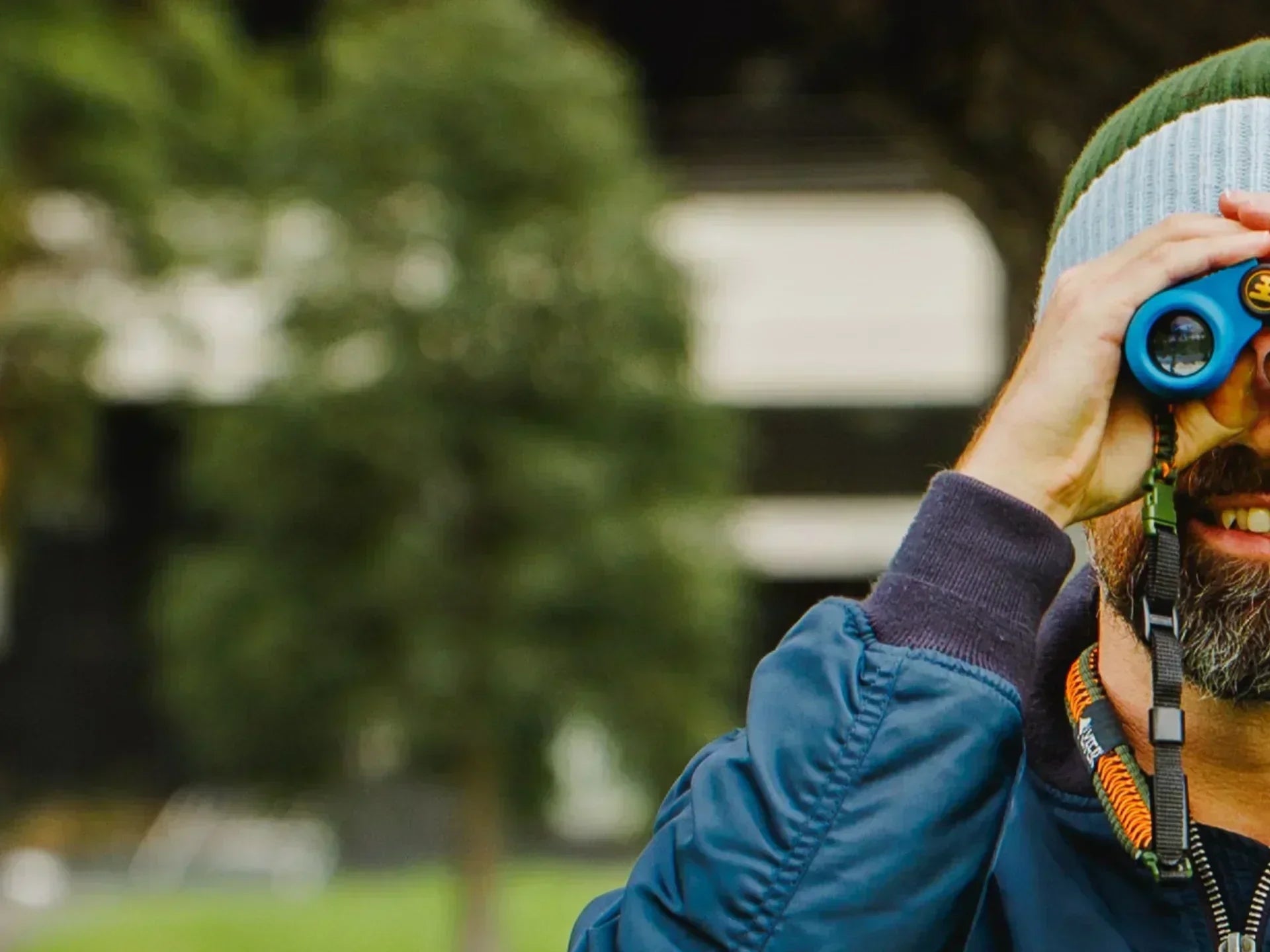
No, you don’t, but in saying that, they will change how you connect with birds once you start using them.
It’s obvious to say but binoculars (or bins) bring details into view that are difficult to appreciate with the naked eye: feather patterns, eye colour, bill shape and behaviour.
For many people starting out, compact 8x25 binoculars can be a great first pair. They are compact so they are easy to carry, easy to use and generally more accessible in price, making them well suited to everyday birding and travel.
Remember that you don't need to become an optics expert. First, find the birds and the gear will follow.

8. Finding somewhere new to bird
Once I got hooked by my local birds, like all of us birders, I then started wondering what else is out there.
And to say there is a lot is an understatement - there are more than 11,000 recognised bird species around the world!
I always use my eBird hotspot maps to show me places other birders visit regularly and the species that have recently been recorded there. Local reserves, wetlands, national parks, walking tracks and coastal areas are all worth exploring. Before you get out there, try learning some of the calls and songs of the birds in the area to help you once you are there!
Also, don't automatically overlook cities, we have some amazing birds right in the heart of our urbans areas.
A small urban wetland, botanical garden or creek corridor can hold far more birdlife than you might expect. This is the exact reason that we created the Urban Birders Guides, Bird The City, you can download them free over at our website. It's also our way of sharing a fondness for our city birds and encourage more people to urban bird.
For me, the exciting part of birding, wherever you choose to do it, is that it starts giving you reasons to visit places you may never have thought about before.
Birding really does take you places!
9. The most important birding skill is paying attention and tuning in
Trust me, you will get better at identifying birds. You will learn bird calls, and your list of birds will start to grow. But the biggest change I found, and I think you will too, is simply that you begin to notice more.
In your everyday life you will start to notice movement, then a call will make you stop mid-conversation and you find yourself looking up when everyone else is looking at their phones. I now find that places that I thought I knew, suddenly started revealing things that were actually there all along.
You've probably heard it before, but birding makes you slow down in a world that constantly distracts us and tries to keep us in the fast lane. I remind myself of that everyday. It gives me a reason to listen and really be present in the place I am in.
So, if you have been wondering how to start birdwatching, there is really only one thing left to do. Go outside and look around and I guarantee you there will definitely be a bird waiting for you to notice it.
And when you come across some Eurasian Coots, try get a glimpse of their feet!

10. When ready for gear, start with a Birding Starter Pack
You don’ t need a lot of gear to become a birder.
From my own experience, I kind of wish someone had simply put the basics together for us when I started, so I didn’t have to overthink it. Most outdoor pursuits have some version of a starter kit to help get you on your way, so I thought birding should have one too.
So, I've put together a Birding Starter Kit for you, with all the essentials I think are genuinely useful when you’re beginning:
-
A pair of starter bins
-
A comfy strap
-
An easy to use bird guide
-
Something to keep your bins clean
And I don’t want this to suddenly turn into a sales pitch, but so many people have reached out to me asking what they need to get started. We realised that we already had all the things I’d recommend anyway, so we put them together to make it easy.
Ok you’ve got what you need so all that is left to do is get outside!
See you out there.
Josh Symons
Co-founder of LYFER