

Where Do Birds Go? Understanding Bird Migration in Australia
One season they are here and then, gone.
Bird migration is simply the regular movement of birds between different places, often connected to seasonal changes in food, habitat and breeding opportunities. Simply defined yes, but complex in creation.
Some birds cross countries and oceans while others move between different parts of Australia. Some cross Bass Strait or travel shorter distances as local conditions change.
LYFER breaks down in a 5 minute read, the world of migration and takes a look at a few of those Australian birds who are partial to some travel.
WHY DO BIRDS MIGRATE?
Birds migrate when moving gives them better access to the places and resources they need.
Seasonal changes affect the availability of food, including insects, flowering plants, fruit and other food sources. Migration can also allow birds to breed in places where conditions become a lot more suitable during particular parts of the year.
It is not just simply about escaping cold weather. Food, suitable habitat and breeding opportunities are all important parts of the story.
Different species also move in different ways. Some follow regular seasonal routes, while other Australian birds move more flexibly in response to rainfall and changing food supplies.

SO, WHERE DO AUSTRALIA’S MIGRATORY BIRDS GO?
Many of the shorebirds seen around Australian wetlands spend the Northern Hemisphere summer breeding in Arctic and sub-Arctic regions before travelling south to Australia for their non-breeding season.
Their route forms part of the East Asian–Australasian Flyway. This massive migration route connects breeding grounds in Russia and Alaska with East and Southeast Asia, Australia and New Zealand.
Thirty-seven international migratory shorebird species regularly visit Australia and are listed as migratory under Australia’s Environment Protection and Biodiversity Conservation Act.
Australia is not just somewhere these birds pass through. Many of these clever birds spend a significant part of the year feeding and resting in Australian wetlands before beginning their return journey north.

DO AUSTRALIAN BIRDS MIGRATE WITHIN AUSTRALIA?
Yes. Migration does not always mean flying from one side of the world to the other.
Some birds move between northern and southern Australia. Others cross Bass Strait between Tasmania and the mainland. Summer visitors may arrive in one region to breed before leaving again as the seasons change.
A bird that appears in your neighbourhood every spring may have travelled much further than its casual arrival suggests.
HOW DO MIGRATING BIRDS FIND THEIR WAY?
This is a topic that will require us to spend a lot more time, but for the sake of this Avian Journal, lets just say that different birds use different sources of information to navigate.
Research has shown that migrating birds may use the position of the sun, the stars, Earth’s magnetic field and familiar features within the landscape. The way these systems work together differs between species and is still being studied.
It is one of the most remarkable parts of migration and one that continues to fascinate and encourage research. A bird can travel across regions, countries or oceans and arrive at the habitats it needs.
WHY ARE WETLANDS AND STOPOVER SITES SO IMPORTANT?
Migrating birds cannot complete long journeys without suitable places to feed and rest.
Australia’s coastal mudflats, estuaries and wetlands provide migratory shorebirds with places to rebuild the energy used during migration. Many species rely on a chain of suitable habitats across several countries rather than one single destination.
When an important wetland is damaged or lost, the effects can extend far beyond that location. Birds travelling along the East Asian–Australasian Flyway depend on functioning habitats throughout their journey.
Protecting migratory birds therefore requires cooperation across borders. Birds may not recognise national boundaries, but they are affected by what happens within every one of them.

SOME MIGRATORY BIRDS FOUND IN AUSTRALIA
Australia has many migratory bird species, so this is not a complete list. These examples show how varied their journeys can be.
EASTERN KOEL
Where it is found: Northern and eastern Australia, with increasing records in parts of Victoria.
Where it goes: Eastern Koels generally arrive in Australia from New Guinea and Indonesia around September before returning north after the breeding season.
Why it migrates: It comes to Australia during the warmer months to breed and feed on seasonal fruit, particularly figs.

DOLLARBIRD
Where it is found: Woodlands and forests across northern and eastern Australia, often near rivers and other waterways.
Where it goes: Dollarbirds arrive from New Guinea and nearby islands during spring before returning north after breeding.
Why it migrates: They travel to Australia to breed during the warmer months, when flying insects are more readily available.

RUFOUS FANTAIL
Where it is found: Moist forests, rainforest edges and dense vegetation in eastern and south-eastern Australia.
Where it goes: Many Rufous Fantails move north from south-eastern Australia during autumn, with some travelling as far as New Guinea.
Why it migrates: Moving north allows them to follow warmer conditions and the insect food on which they depend.

SWIFT PARROT
Where it is found: Tasmania during the breeding season and parts of Victoria, New South Wales and occasionally other areas of south-eastern mainland Australia during winter.
Where it goes: Swift Parrots breed in Tasmania before crossing Bass Strait to mainland Australia.
Why it migrates: They breed in Tasmania during the warmer months and then move to the mainland, where they search widely for flowering eucalypts and other food during winter.

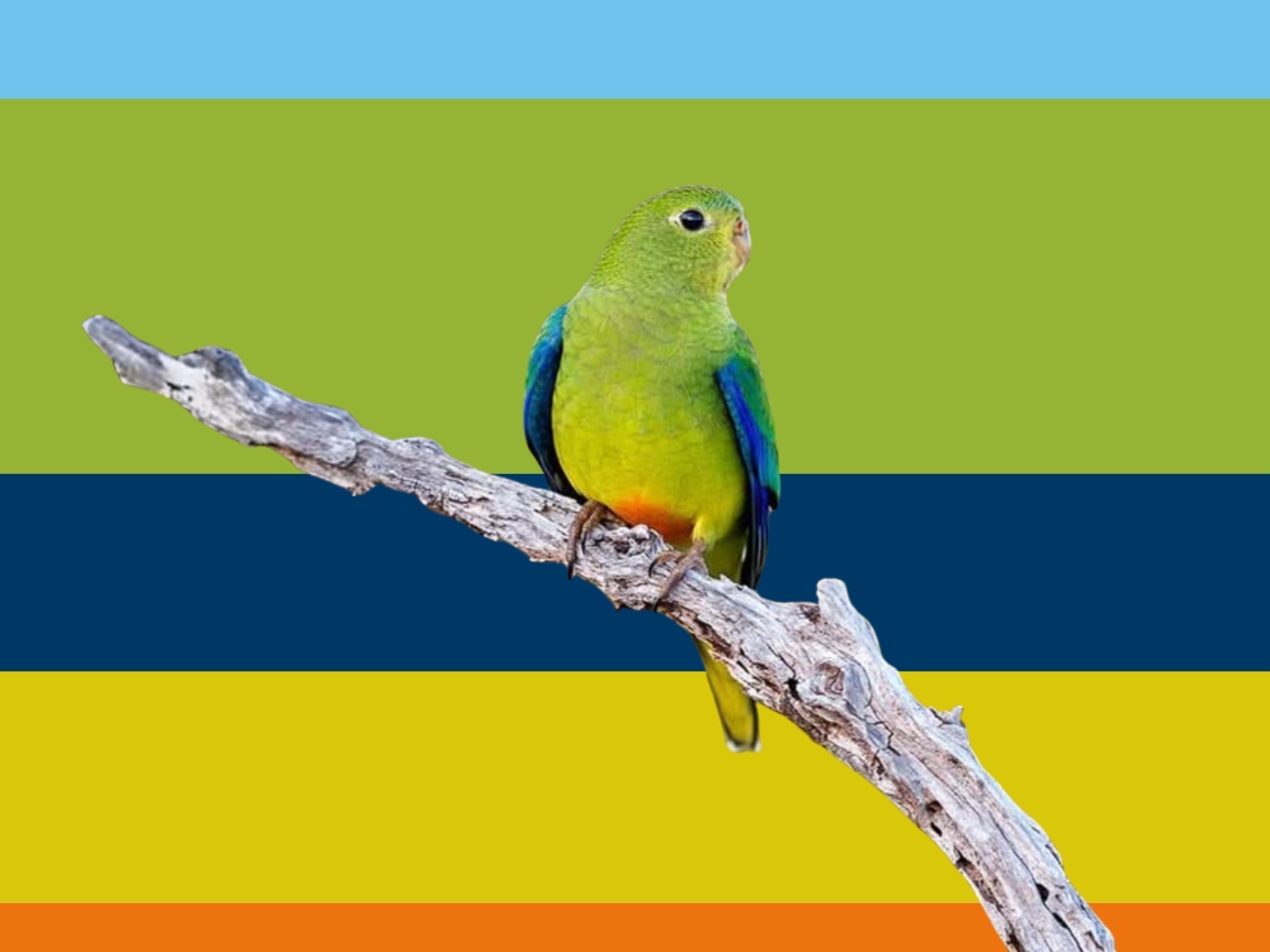
ORANGE-BELLIED PARROT
Where it is found: South-western Tasmania during summer and coastal Victoria and South Australia during autumn and winter.
Where it goes: Orange-bellied Parrots cross Bass Strait twice each year between their Tasmanian breeding grounds and mainland wintering habitat.
Why it migrates: They breed in Tasmania during summer before moving to coastal mainland habitats for the non-breeding season.

LATHAM’S SNIPE
Where it is found: Freshwater wetlands, wet grasslands and other damp areas, mainly across eastern and south-eastern Australia.
Where it goes: Latham’s Snipe breeds in Japan and parts of eastern Russia before travelling to Australia for the non-breeding season.
Why it migrates: Australian wetlands provide suitable feeding habitat while it is winter in its Northern Hemisphere breeding range.

FAR EASTERN CURLEW
Where it is found: Coastal wetlands, estuaries and tidal mudflats, particularly across northern, eastern and south-eastern Australia.
Where it goes: It travels to breeding grounds in Russia and north-eastern China.
Why it migrates: It spends the non-breeding season feeding in Australian coastal habitats before travelling north to breed during the Northern Hemisphere summer.

BAR-TAILED GODWIT
Where it is found: Coastal mudflats, estuaries, beaches and mangroves around Australia, with particularly important habitats in northern Australia.
Where it goes: Populations visiting Australia travel to breeding grounds in Arctic and sub-Arctic parts of the Northern Hemisphere, including Alaska and northern Russia.
Why it migrates: Australian wetlands provide feeding habitat during the non-breeding season. The birds then travel north to breed during the Northern Hemisphere summer.

Bird migration is one of those subjects that keeps opening up the more we learn.
There is still so much we do not fully understand, and perhaps some parts of these journeys will always remain beyond us. That is part of what makes them so extraordinary.
The distances birds travel, the places they return to and the instinct that guides them will continue to inspire our curiosity and remind us how much there is still to notice.