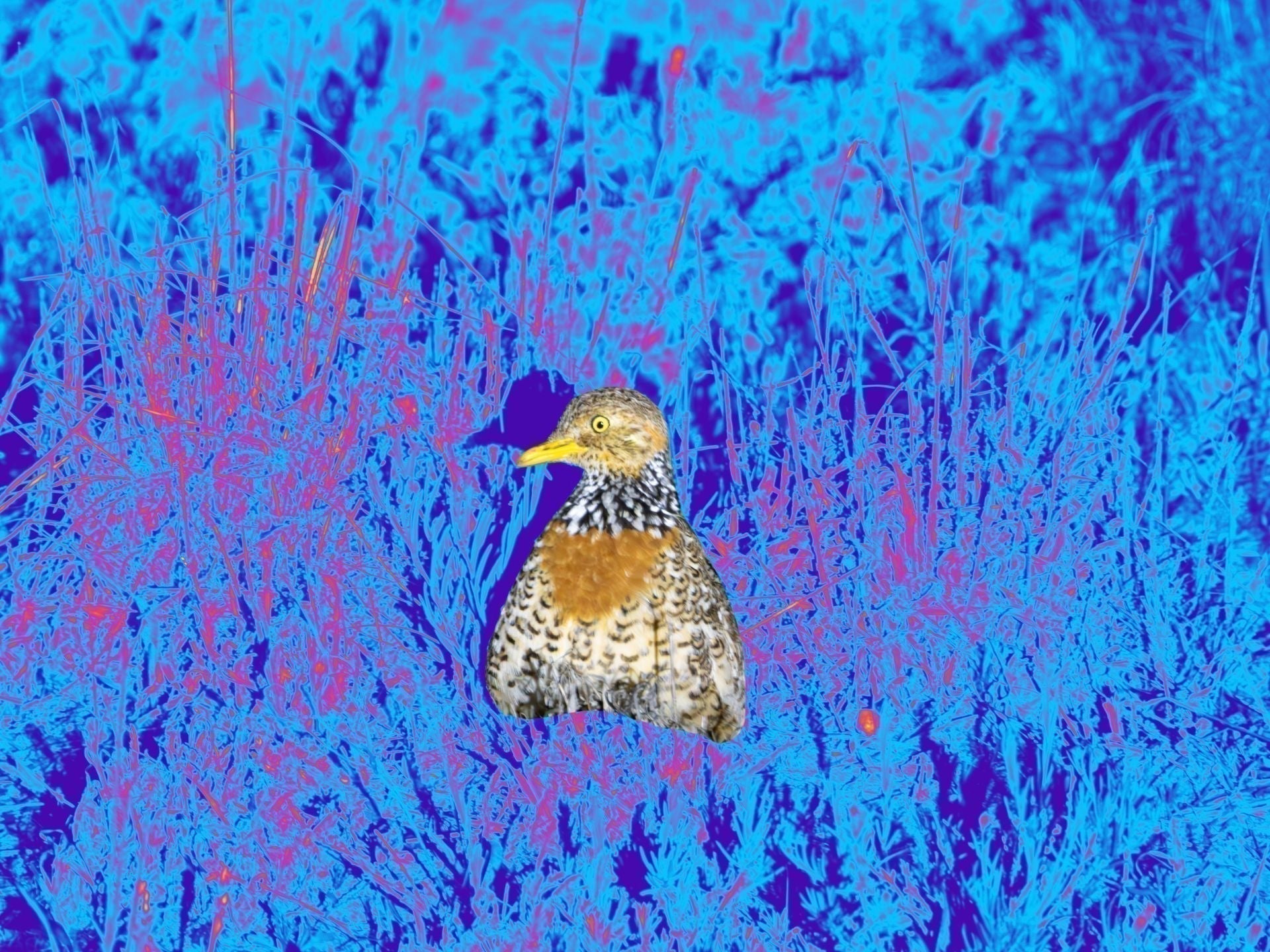
A night with the Plains-wanderer
There are birding trips, and then there are the ones that feel like a privilege from the moment they begin. Recently, thanks to a generous gift from my Uncle Doug and Helen, we found ourselves heading north to Deniliquin for a chance to go out with the legendary Phil Maher in search of one of Australia’s most elusive birds, the Plains-wanderer. This is the story of that night, the birds we met, and the people who’ve spent decades protecting a species that almost no one gets to see.
[Estimated read: 8 minutes]
We arrived in Deniliquin on Friday, September 26, stepping into heat we hadn’t felt in months down in Melbourne. It was 26 degrees and definitely shorts weather. After checking into our hotel, we went to say hello to Doug & Helen for a quick catch up. About ninety minutes later, Phil arrived in his white Toyota LandCruiser, a wide-brimmed hat on the dashboard and a LYFER cap on his head (I promise no product placement, he legitimately purchased!) . We packed up our picnic dinner and set off north of Deniliquin towards the Hay Plains.
Helen prompted me as we set off to let Phil know if there were any particular birds I hadn’t seen yet in the area and that I should tell Phil now! There were a few - Striped Honeyeater, White-winged Triller, Painted Honeyeater, and White-winged Fairywren. I also really hoped for James to see the Australian Owlet-Nightjar. Phil wasn’t fussed by any of these requests, much to our delight. The only challenge, he said, would be the Painted Honeyeater at this time of year. I also added one more, a bit of a bogey bird for me - the Greater Bluebonnet. I’d been to Goschen, Victoria, three times hoping to see and dipped every time.
Phil arrived in his white Toyota LandCruiser, a wide-brimmed hat on the dashboard and a LYFER cap on his head.
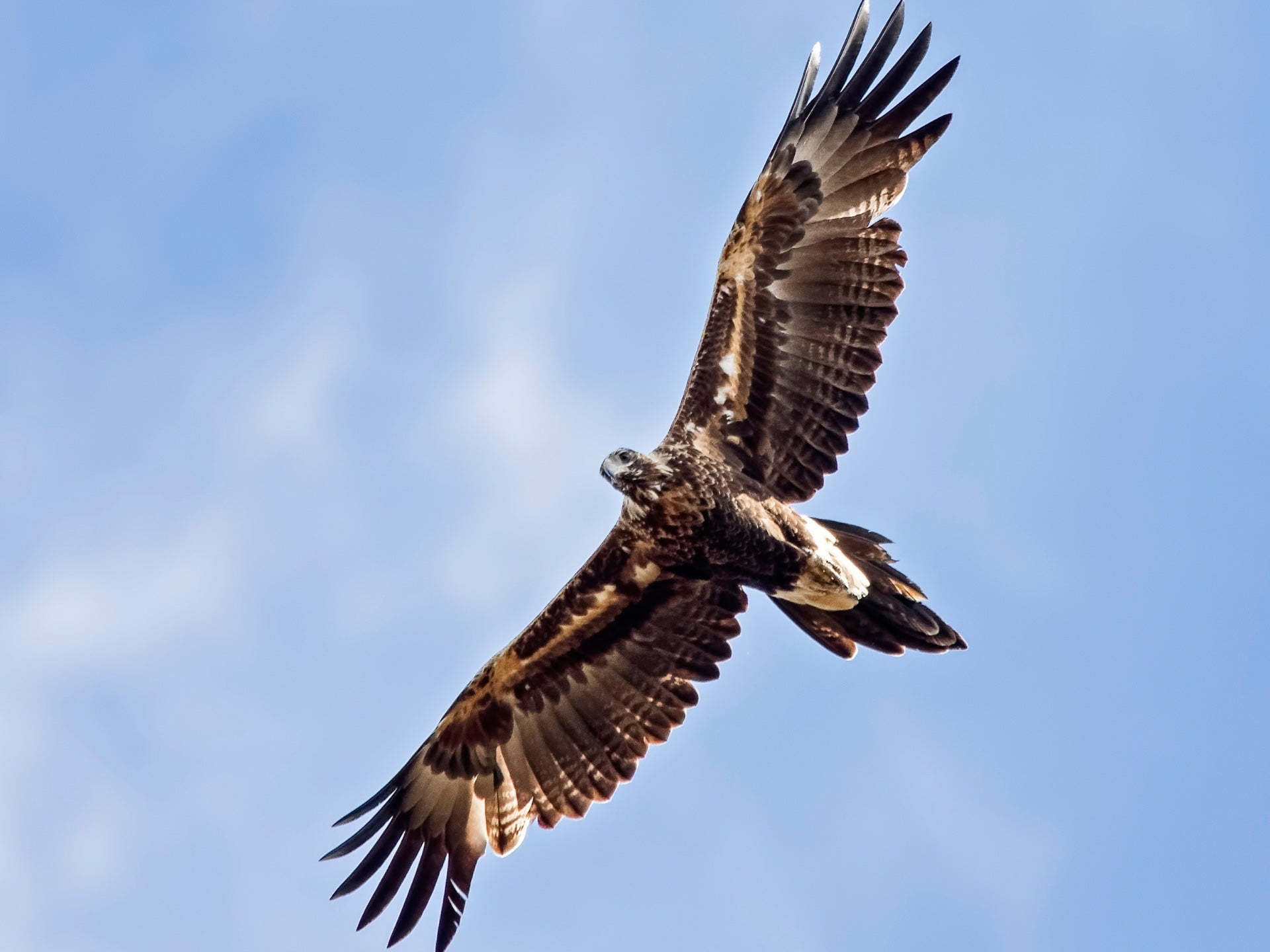
Our first stop was some bushland not far off the road, we were being watched carefully by Black Kites circling above. Phil explained how many White-winged Trillers were coming through at the moment. Within two minutes we were surrounded by White-winged Trillers, Striped Honeyeaters, and a Willie Wagtail. That was fast and very efficient, I must say!
Further up the road, Phil told us about the fenced-off blocks where he’s been planting mostly native vegetation. Earlier that day, while checking in on one of them, he noticed ravens making a huge fuss. Looking up, he realised why - a six-foot tiger snake was about ten feet above his head, raiding a nest for lunch. Not something you see every day. The snake wasn’t bothered at all by Phil’s presence, so he simply continued on as well.

We stopped at another one of these blocks, and it was immediately obvious why they mattered. Overgrown trees and shrubs filled the space, and the sound of birdlife carried as we approached. The unmistakable song of the Spiny-cheeked Honeyeater was prevalent.
Phil led us around to the back to look for a particular bird we had requested - the Australian Owlet-Nightjar. Man-made hollows were strapped to the trees, which I assumed Phil had built himself. We crept closer, and there it was, peering out of the first hollow, like a kid caught in the act, the inquisitive, wide-eyed Australian Owlet-Nightjar.
A long-awaited tick for James. As I pulled my gaze away from it, two Greater Bluebonnets suddenly flew in and landed on the fence twenty-five metres away. Before I could even alert everyone, they were gone. Luckily, I had managed a quick photo before they disappeared for proof!
I asked Phil what he thought had changed most in the bird world over the past forty years. His answer was simple: populations.
We left our Nightjar friend in peace and continued north. Along the way, I asked Phil what he thought had changed most in the bird world over the past forty years. His answer was simple: populations. Small birds in particular get decimated by droughts, but across the board, there are just fewer birds than there used to be. Sobering words to carry with us.

We turned down a dirt road, crossed a grid, and entered private land. An Australian Pipit perched proudly on top of a saltbush, while a Rufous Songlark displayed overhead. Further along, Doug’s sharp ears picked up the White-winged Fairywrens. A male popped out of the bushes, his deep blue plumage glowing in the fading light. It was one of those moments where a bird stops you in your tracks with its beauty. The night was still young, and already unforgettable.
We moved deeper into the property. The sun was setting, painting the sky with orange and pink, high clouds catching the last of the light. It was magnificent - I was on gate duty!

We pulled up for dinner in a paddock, unpacking the treats we had raided from South Melbourne Market earlier that day to share with Helen, Doug, and Phil. Helen, true to form, had a cup of tea in hand. We dug in, buzzing with anticipation. Until this point, I hadn’t been sure how the experience would play out. That changed when Phil revealed his secret weapon: a thermal-imaging device that could pick up the heat of birds in the dark. It wasn’t perfect - if a bird had its back turned, you might miss it, but it felt like magic.
By now it was pitch dark. We assembled behind Phil and set off across the paddocks. The glow of Hay and maybe Booroorban flickered faintly in the distance. We were searching for two species first up: the Banded Lapwing, known to be nesting in these paddocks, and the Inland Dotterel.

Walking the Plains-wanderer’s country by night was surreal. The terrain was bare earth broken by two layers of grass, perfect for the species we hoped to see. There were few bushes, so although you could stumble in the dark, it felt safe and strangely comfortable. Doug and Helen walked arm in arm for support. Slowly, our eyes adjusted, until Phil suddenly called, “Gather around, folks!” His spotlight lit up a Banded Lapwing. Moments later, another.
We had no luck with the Inland Dotterel, finding one would have been like searching for a needle in a haystack. So we climbed back into the LandCruiser, spotting yet another Banded Lapwing along the way, and drove to the next paddock.
When we stepped out again, the full breadth of the stars had emerged. The Milky Way stretched across the sky in a luminous band, and through binoculars the haze broke apart into hundreds of pinpoint stars. It has to be one of the best night skies anywhere.
After twenty minutes of walking, Phil’s voice cut through the silence again. “Gather around, folks!” His beam revealed her — a female Plains-wanderer, glowing in full breeding plumage! Even Phil, who has banded hundreds, declared, “You won’t see a better Plains-wanderer than this.”

We kept our distance, watching as she took a few careful steps, pausing between movements with a smoothness that felt almost hypnotic. Her bright yellow legs were unforgettable. She didn’t seem alarmed, just cautious, curious even. We switched off our torches to let her melt back into the night. Plains-wanderers aren’t nocturnal, they’re just calmer and easier to find at night. By day, they stay alert, squatting flat against the earth to hide from raptors like Black Kites, their plumage rendering them nearly invisible.
It was nearly 10 p.m. now. We’d been out since 4 p.m., and the night had already given us more than we could have imagined. But Phil wasn’t finished. Another call to gather, and this time his light revealed a male Plains-wanderer sitting tight, most likely on three chicks.
I caught a glimpse of one tiny spotted leg poking out from under his feathers, which spread around him like a miniature hoop skirt. He stared calmly towards the light, seemingly unbothered by our presence. In photos, their bold yellow eyes and dark “eyeliner” can make them look startled, but here, in real life, he was simply still.
We let him be, switching the light off and calling it a night.

It’s hard to describe just how special it felt to stand there. For over forty years, Phil, his wife Trisha, and local landholders have worked to notice, protect, and care for this fragile bird. Thanks to them, the Plains-wanderer is more than a name in a field guide. It’s a living presence on the plains and a true legacy of Phil and all those who have helped him be the guardian of these beautiful creatures for nearly 50 years. Thank you Phil & thank you Doug & Helen for taking us on this unforgettable experience.
We couldn’t recommend Phil’s bird tours more, whether you are a birder or not, this is an experience of a life time. If you’re interested please contact Phil here and arrange your unforgettable birding and nature experience. https://www.philipmaher.com/personal.htm
__