
A Brief History of the Bird Field Guide, And Why We Still Reach For It
If you’ve spent any time birding, you’ve probably held a field guide in your hands, flicking through pages trying to match a fleeting moment while a bird frolics in the trees before you.
Even now, with apps that can identify birds in seconds, the field guide hasn’t gone anywhere. In fact, it still holds its ground and it’s more popular than ever.
So where did these guides come from, who shaped them, and why do so many of us still rely on them? Lets go on a super quick journey to share how it all started.
Before Field Guides, There Were Books You Couldn’t Carry
Before field guides existed, bird books were large, detailed works created for study rather than use outdoors.
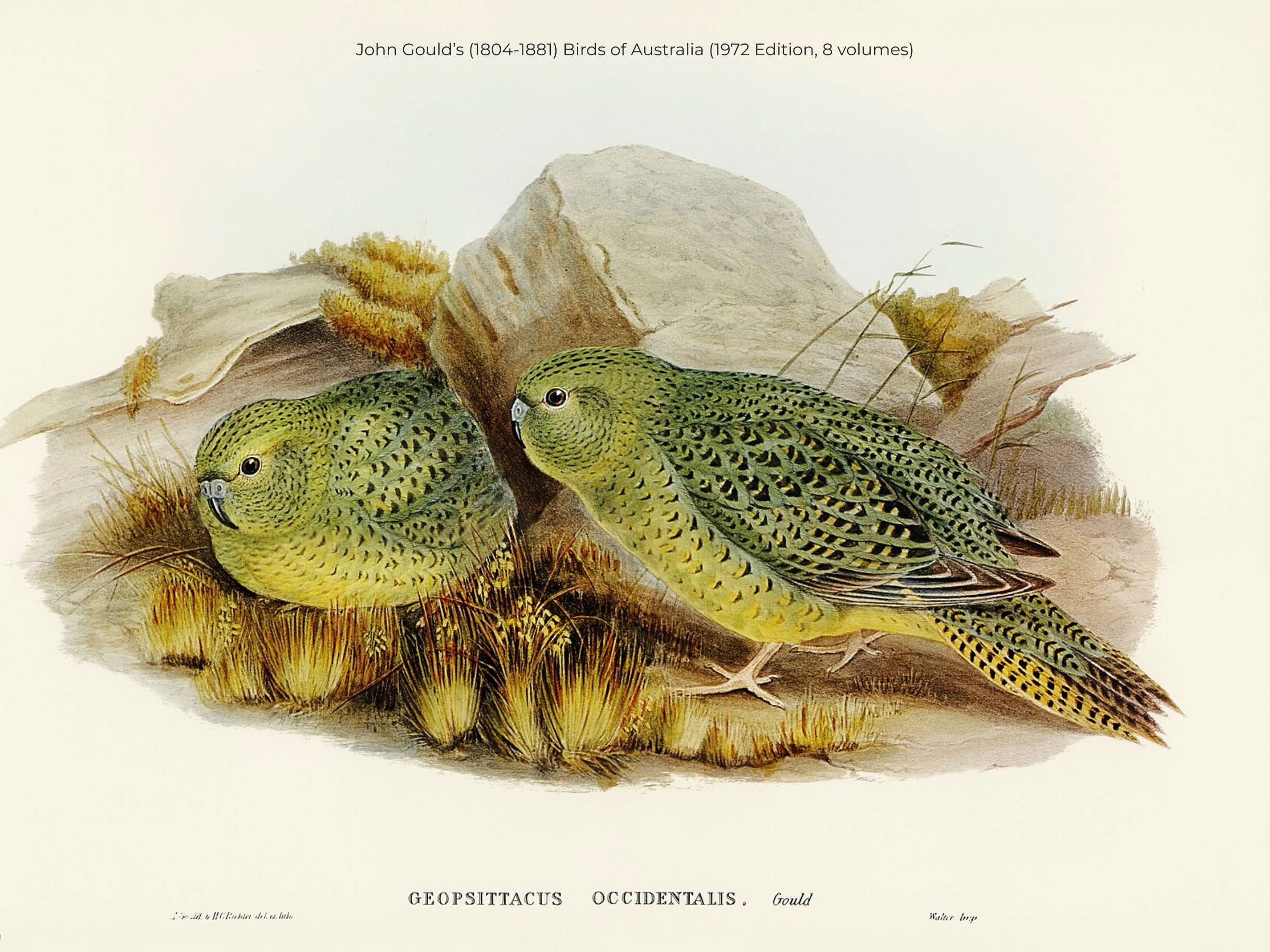
One of the most influential figures in this space was John Gould. Working alongside him was Elizabeth Gould, whose illustrations were essential to the success and accuracy of these publications. (Read The Birdman’s Wife, an excellent read about their life of the Gould’s)
Their work, including The Birds of Australia published between 1840 and 1848, set a benchmark for documenting species with precision. These books were scientifically important, but physically impractical to carry into the field.
They established something critical though, that birds could be identified through visual detail and comparison.

From Study to Field
And so was born the ‘modern field guide’, as we know it today, that began in the early 20th century.
The key figure here is Roger Peterson.
His 1934 book, a Field Guide to the Birds, is widely recognised as the first modern field guide.
What made it different was its approach. Instead of overwhelming readers with exhaustive detail (but in a good way!)Peterson focused on identification in ‘real conditions’. He introduced simple things like visual markers, simplified layouts, and comparisons between similar species.
This method transformed birding. Identification became faster, more accessible, and something that could happen in the moment, out in the field, not afterwards. Today’s field guides build directly on that foundation.

In Australia, guides published by CSIRO Publishing are among the most widely used. Titles like The Australian Bird Guide are known for combining detailed illustrations, range maps, and behavioural notes in a format that works in the field. Many publishers also release compact bird guides too, making it even easier to have a field guide on hand while your hands are preoccupied with bins and field pads.
They support the way birding actually happens:
-
quick identification in changing conditions
-
comparison between similar species
-
building familiarity over time
We stock a selection of these guides because they continue to do exactly what they were designed for, helping you learn birds properly, not just recognise them.
Field Guides and Apps
But what about technology? Yes it has changed how we identify birds, but its not a question of replacing the humble guide, it's actually one perfect mix of tools.
Merlin Bird ID, needs no introductions, it can identify species by sound or following a few quick clicks in seconds. They’re fast, convenient, and often incredibly accurate.
But they also change the process. Yes, they give us instant results but there's no denying that it changes your birding experience at that moment.
Using a field guide slows things down. You observe more. You compare. You make the call yourself. That process builds recognition in a different way, and for many, that’s where the reward sits.

Over time, field guides haven’t just become more accurate, they’ve become more considered in how they’re used. While most still focus purely on identification, others now take a broader approach. Guides that become companions, guiding you through places, habitats, and experiences.
That shift says a lot about where birding is today. It’s no longer something that sits in isolation and just identification. “Guides” can be a whole lot more. They can be companions through everyday life, travel, weekends away, even a walk through the city.

The crew at LYFER have done just that too. Our Urban Birders Guides for Australian cities aren’t field guides in the traditional sense. They’re built around how birding fits into a day, where you go, what you notice, and how it connects to everything else around you. Not so much about identifying, but more so observing.
Ok, this was brief but we hope to encourage you to take the time to explore the history of bird field guides, it's really fascinating stuff. Early bird study wasn’t always as we know it today, identifying species often involved collecting them (shooting birds!), rather than observing them.
The shift from that to field guides, and now to how we experience birds in everyday life, says a lot about how both birding and our relationship with nature has evolved. What comes next, let’s wait and see!