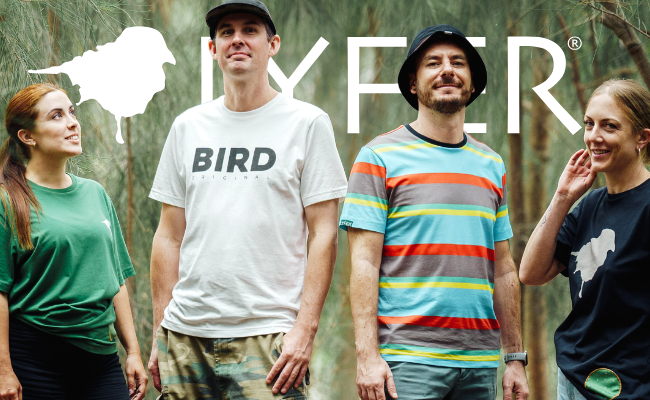

The Endangered Range is designed to raise awareness of critically endangered birds. Wearing it helps keep their stories be part of everyday life.
Bird populations are under increasing pressure from habitat loss, climate change, pollution, and human activity. The decline is real, and it often happens quietly, out of view.
What we wear already says something about us. The Endangered Range uses that visibility deliberately, bold colour, strong graphics, and considered design that stands out for the right reasons and invites conversation.
Every piece in the Endangered Range is designed by us in Melbourne and made in close collaboration with our small batch textile partners in Peru & Portugal. They’re part of our extended team, guiding material choices, construction, and responsible production practices. The result is apparel that’s distinctive, well made, and easy to stand behind.
"This is a genuine call to action to raise awareness, spark conversations, and, with your help, support their survival." Josh, Lyfer Co-Founder.

Each Endangered T shirt includes an internal QR code tag. It links back to LYFER, where we share the story behind the range, the birds it represents, and the organisations working to protect them. It’s a simple way to pass the conversation on.
The Birdmark logo is embroidered on the left shoulder, a signature detail across LYFER apparel. The placement is intentional and a will raise a guaranteed smile.
We’ve also established the LYFER Endangered Bird Fund. 10% of all sales from the Endangered Range are directed to organisations actively working to conserve endangered birds and the habitats they depend on.
SERIES 1: GOLDEN-SHOULDERED PARROT
The Golden-shouldered Parrot is a rare Australian parrot found only in the tropical savanna woodlands of Cape York Peninsula in far north Queensland. It is highly specialised, relying on open grasslands and open woodlands with termite mounds, which it uses for nesting.
Since the 1920s, the species has disappeared from more than half of its original range. Fewer than 1,000 individuals remain in the wild, with current estimates as low as 770 birds. Habitat change driven by land clearing, grazing, altered fire regimes, and invasive species has significantly reduced suitable nesting and feeding areas.
Artemis Station on Cape York was once a stronghold for the species. Over the past decade, the population there has declined to around 50 birds. Increased tree and shrub density has transformed open grasslands, allowing predators to become more numerous and more effective, placing intense pressure on adult parrots and nestlings.
Conservation Partners is leading on-ground work at Artemis Station using a two-part approach. The first focuses on securing the remaining population through immediate interventions, including protecting nests from predators, managing meat ants, controlling feral cats, and providing supplementary food in predator-safe structures. These actions aim to increase survival and breeding success while longer-term solutions take effect.
The second approach centres on habitat restoration. Since 2019, Conservation Partners has been carefully restoring open grassland structure across critical nesting areas, while protecting termite mounds and preventing soil erosion. Between 2019 and 2023, more than 60 hectares of nesting habitat were restored, reducing predation pressure and supporting population recovery.
Ongoing monitoring is central to this work. Individual parrots are colour-banded and tracked using field observations and camera monitoring, allowing conservation teams to measure survival rates, breeding success, and the effectiveness of interventions.
Through the Endangered Range, LYFER supports Conservation Partners and their work on the ground in Cape York. A portion of sales from this range contributes directly to habitat restoration, predator management, and long-term monitoring of the Golden-shouldered Parrot population.
SERIES 2: ORANGE-BELLIED PARROT - COMING SOON

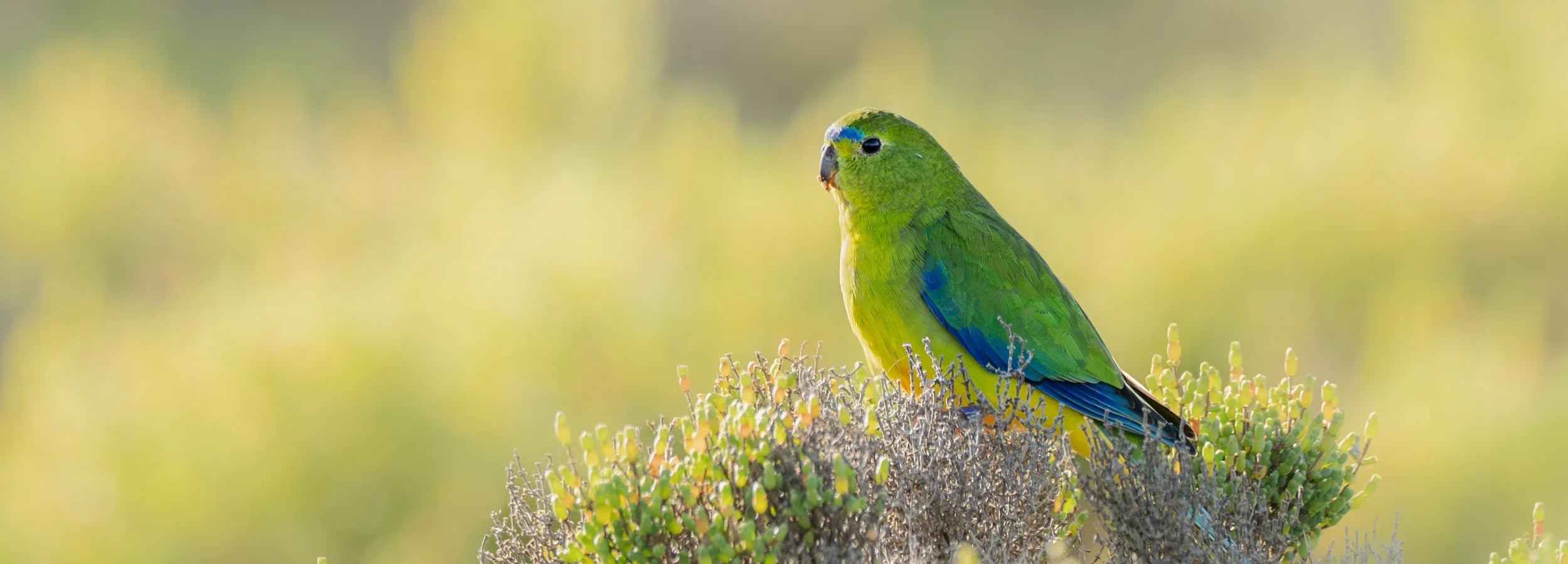
Image: David Stowe
The Orange-bellied Parrot (Neophema chrysogaster) is a small, migratory parrot found only in Australia. It breeds in south-west Tasmania in coastal button-grass moorlands and salt-marsh, before migrating across the Bass Strait for winter along the coasts of Victoria and South Australia. It is one of the world’s few migratory parrot species.
The Orange-bellied Parrot is listed as Critically Endangered, with the wild population fluctuating at extremely low numbers, often estimated at fewer than 100 individuals. Habitat loss and degradation, predation, disease, and the pressures of migration continue to threaten the species, placing it at ongoing risk of extinction.
In early 2026, LYFER will release Series 2 of the Endangered Range, raising awareness of the Orange-bellied Parrot through a T-Shirt & Socks designed to keep this species visible and in conversation.